
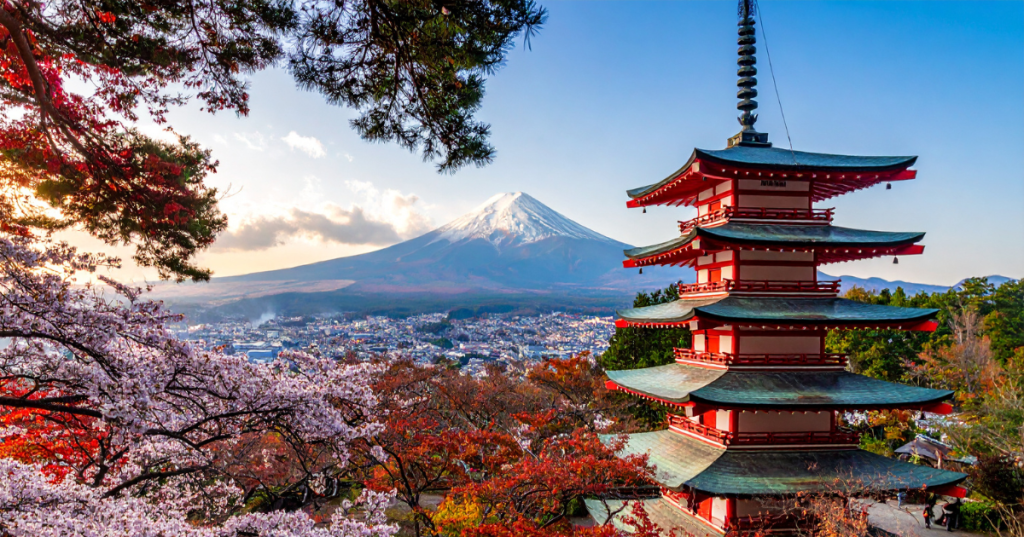
Japan is one of the destinations I get asked about most, and one where I hear the same worry over and over: “we don’t know where to start.” The good news is that there isn’t one right way to see it. A large part of my job is factoring in who’s traveling — their ages, their past travel history, their preferences and needs — and shaping the days around that, not the other way around. There are no cookie cutter trips here! To show what that looks like in practice, here are three trips I’ve planned for three different travelers: a family visiting for the first time, a couple on a repeat trip looking for something they hadn’t already done, and three multigenerational families who combined a few days on land with a cruise.
A First-Time Family Trip: Tokyo → Hakone → Kyoto → Osaka
A family of four — two kids, ages nine and twelve
This family’s first trip to Japan followed a Tokyo–Hakone–Kyoto route, with a final day in Osaka before flying home. It covered a lot of ground and highlights without feeling rushed, and was built around contrast: city and nature, tradition and modern chaos, structured touring and hands-on activities the kids could take part in.
Lodging was chosen with a nine- and twelve-year-old in mind at every stop: rooms with a little more space than the standard, bunk beds where we could get them for a bit of novelty, kitchenettes when the option existed, and neighborhoods that were central but still family-friendly rather than the busiest tourist strip in each city.
Tokyo opened the trip, and it was dense with contrast on its own. TeamLab Planets — the immersive tech-art museum — was a hit with everyone. A private walking tour paired Meiji Jingu and Sensoji, two of the city’s most important shrines and temples, against Harajuku and Akihabara, where the same city turned into a sensory overload of fashion, anime, and electronics, letting the family feel both sides of Tokyo in a single guided day. A Tsukiji market tasting tour and sushi class rounded things out and gave them a chance to experience local cuisine with the help and insight of a guide.
From Tokyo, the family traded the city for two days in Hakone — a deliberate break in pace. Time there included a ride on the Hakone Ropeway for views over the volcanic landscape, a boat cruise across Lake Ashi, and a wander through the Hakone Open-Air Museum, where sculptures scattered across open lawns gave the kids room to run rather than a gallery to stay quiet in. Evenings ended with a soak in the hotel’s onsen — a first experience with Japanese bathing culture for the whole family, and a welcome one after two days on the move.
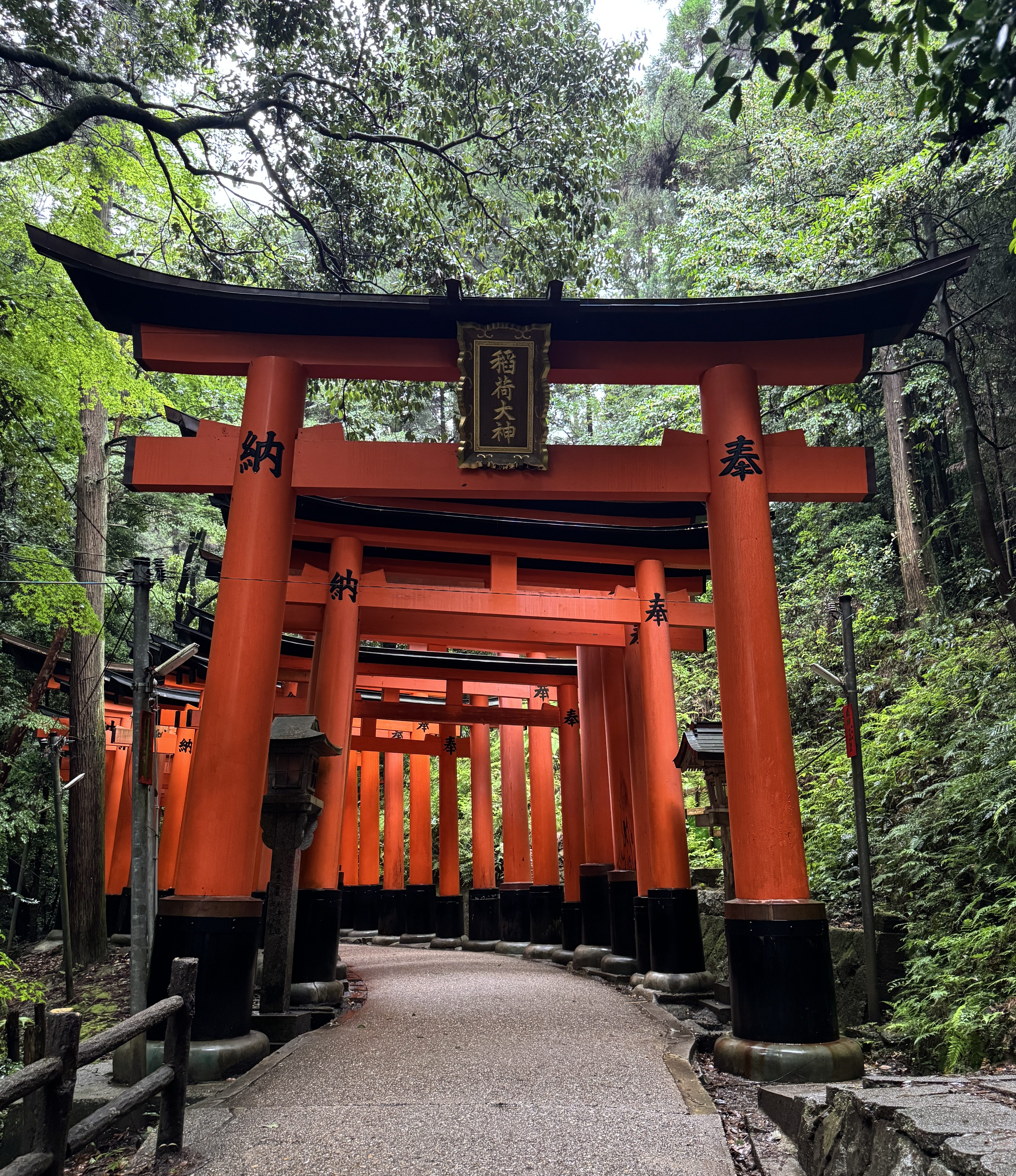
Kyoto brought the trip’s cultural core. A hands-on ramen cooking class had the family making noodles from scratch and building their own bowls before eating what they’d made. Fushimi Inari’s thousands of vermilion torii gates turned into a hike in addition to an opportunity to learn about local religious customs in an interactive way. A taiko drumming class let the kids pound out rhythms in ways a straight day of temple-hopping couldn’t match, and the bamboo grove at Arashiyama offered a quieter contrast the afternoon of their last day in Kyoto.
The trip wrapped with a day in Osaka before flying home, capped by an evening food tour through a city nicknamed the “Kitchen of Japan” — a fitting last night for a trip built around tasting as much of the country as seeing it.
A Repeat-Visitor Couple: Nikko → Matsumoto → Nagano → Kanazawa → Fukuoka
A couple in their late fifties, on their second trip to Japan
Having already done Tokyo, Kyoto, and Osaka on their first trip, this couple built their second one entirely around the country’s quieter second tier cities — flying into Tokyo and out of Fukuoka, and traveling by rail everywhere in between, without repeating any stops from their first visit.
Lodging took the opposite approach from a family trip: variety was the goal. The couple stayed in an upscale ryokan, then a boutique Japanese-style hotel, and finished the trip in a luxury hotel in Fukuoka — each chosen for the details that kept reminding them they were in Japan, not just anywhere with good service.
The couple spent their first two nights in Nikko, giving them a full day to cover ground that’s spread out and easy to rush past on a quick stop. A private car and driver took them between Toshogu Shrine, the quieter Futarasan Shrine next door, and Rinnoji Temple’s Three Buddhas Hall in the morning, then out to Lake Chuzenji and Kegon Falls in the afternoon — without either of them needing to work around local bus schedules.
From Nikko, they continued on to Matsumoto, where the days opened up. A brief guided walking tour got them their bearings around the castle town, followed by independent visits to Matsumoto Castle and the neighboring Matsumoto City Museum of Art. A soba-making class rounded things out, since this corner of the Japanese Alps is known for some of the country’s best buckwheat noodles.
An hour-long train ride next brought them to Nagano, where a guided day at Jigokudani Snow Monkey Park delivered the trip’s most memorable encounter — watching the wild macaques soak in their hot springs. The same day wound through Obuse for lunch and a stop at the Hokusai Museum, since this couple’s interest in art made the detour worth building in. They rounded out their time in the city with a visit to Zenkoji Temple, one of Japan’s most significant Buddhist sites, and an afternoon tasting sake at a local brewery, since the region is one of the country’s best for it. They traveled mid-spring with hopes of cherry blossoms, so skiing wasn’t part of the plan, but Nagano is also one of Japan’s premier winter destinations — host of the 1998 Winter Olympics and gateway to resorts like Hakuba and Shiga Kogen — worth knowing for folks traveling between December and March.
Kanazawa turned into a surprise favorite for this couple — the same historic charm as Kyoto, without the crowds. Kenrokuen Garden, the Higashi Chaya geisha district, and the Nagamachi samurai quarter were all easy to take in independently, with entire blocks of preserved Edo-period buildings to wander without fighting for sidewalk space. They added a traditional tea ceremony at one of Higashi Chaya’s historic teahouses, since Kanazawa’s tea houses make it one of the more approachable places in Japan to experience one.
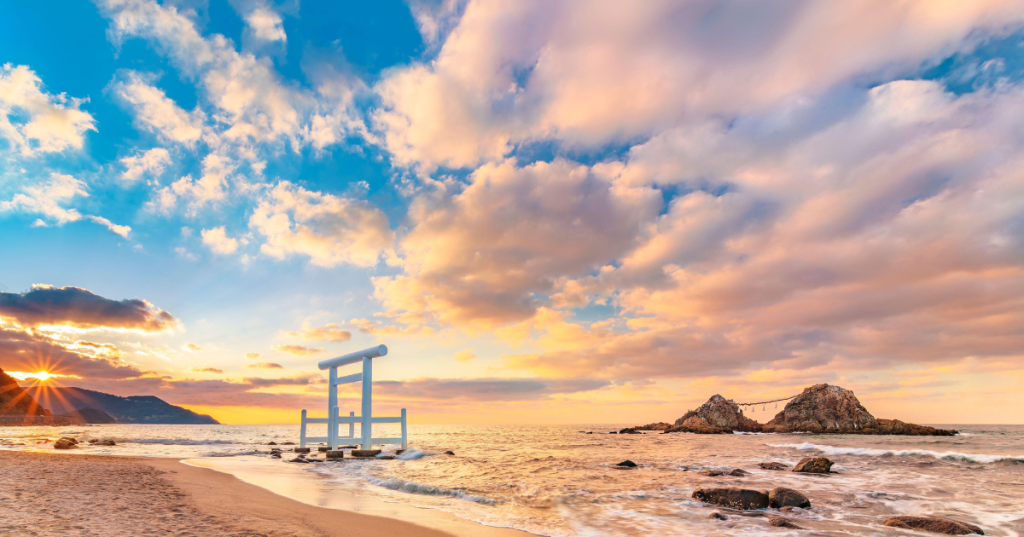
The trip wrapped with a rail journey down to Fukuoka, on the southern island of Kyushu, where the pace shifted again. Independent time in the city was paired with two private day trips — one to Nagasaki, one out to the coastal Itoshima Peninsula — plus an evening street food tour through the open-air yatai stalls along the Nakasu riverside, the kind of place-specific food culture repeat visitors are usually looking for by their second or third trip to Japan.
Three Families, Land & Cruise: Tokyo & Kyoto → Toba → Osaka → Kochi → Hiroshima → Busan → Nagasaki → Shimizu
Three families traveling together — fifteen people, ages seven to the grandparents — on a first trip to Japan
Three families, fifteen people spanning grandparents down to a seven-year-old, took their first trip to Japan together by pairing a few days on land with a cruise that wove through Japan and Korea. The group flew in ahead of the ship, spent time in Tokyo and Kyoto, then boarded in Yokohama for a route that called at Toba, Osaka, Kochi, Hiroshima, Busan, Nagasaki, and Shimizu before disembarking.
With three different family configurations traveling together, lodging centered on hotels that could offer everything from doubles to multi-bed rooms under one central roof, rather than scattering the group across separate properties. Breakfast got extra attention too, since getting fifteen people fed and out the door around the same time made or broke the rest of the day. On shore days, we booked private tours built for the whole group of fifteen whenever an operator could accommodate it, but split into two groups when it made more sense — which had its own upside, letting us pace the day differently for the grandparents and the seven-year-old, who both had a little less endurance than the rest of the group.
Because this group leaned toward pop culture and food over history and tradition, the land portion in Tokyo and Kyoto was built around that. Tokyo meant Akihabara’s arcades and anime shops and a ramen tour through a few of the city’s best-known shops, rather than a full day of temples. Kyoto brought a stop at the Kyoto International Manga Museum and a food tour through Nishiki Market, the city’s answer to a covered food hall, before the group headed to Yokohama to board the ship.
Two of the ports, Toba early on and Kochi a few days later, were left independent — easy ones for a group this size to split up on their own terms. In Toba, most of the family wandered over to Mikimoto Pearl Island, the birthplace of cultured pearls, with its pearl museum and ama diver demonstrations, while others spent their time at Toba Aquarium, one of the only places in Asia to see a dugong. In Kochi, Kochi Castle — one of Japan’s original castle keeps, and far less crowded than Osaka’s — served as the anchor, followed by a few hours at Hirome Market, where the group tried katsuo tataki, the seared bonito Kochi is known for.
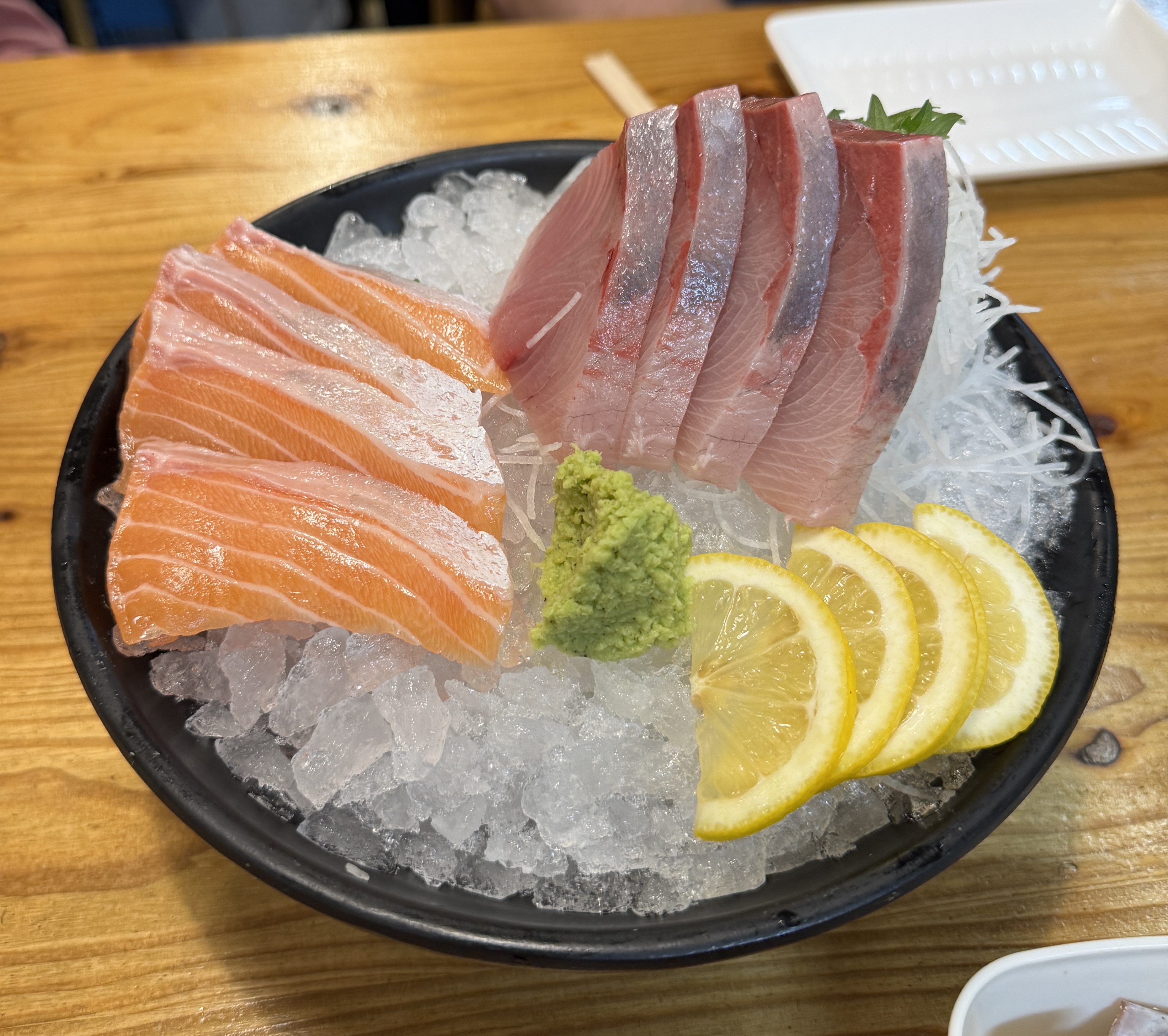
The remaining ports each got a private van tour built around one clear highlight. Osaka meant views of Osaka Castle, the neon and crowds of Dotonbori, and plenty of stops for local food along the way. Hiroshima included Miyajima’s floating torii gate followed by the Peace Park and Museum and a lunch of okonomiyaki. Busan, South Korea — the trip’s one detour outside Japan — brought Gamcheon Culture Village’s colorful hillside alleys and Jagalchi Market, the country’s largest seafood market. Nagasaki covered the Peace Park and Glover Garden, the hillside collection of Western-style homes from the city’s trading-post era. The final port, Shimizu, was built around a van tour up to Mount Fuji’s Fifth Station, but the mountain stayed wrapped in cloud all day (as it does about 60% of the time!), so the group pivoted to the backup plan: Kunozan Toshogu Shrine and a stop at the local fish market for fresh tuna.
For a group this size and this spread out in age, splitting the trip between a few days on land and a cruise that handled the day-to-day logistics of moving fifteen people between cities turned out to be the easier way to cover this much ground in one trip.
Which One Sounds Like Your Trip?
These three trips look nothing alike because the people taking them didn’t look alike either — a family, a repeat-visitor couple, and a fifteen-person multigenerational group all need a different plan, not a different coat of paint on the same one. Japan rewards an itinerary built around who’s going, not a one-size-fits-all list of top sights. Whether you’re weighing a first trip with kids, planning a return visit that skips what you’ve already seen, or trying to figure out how a big, multigenerational group could travel together without anyone feeling shortchanged, that’s the kind of planning I do every day. Reach out, and let’s figure out which version of Japan is yours.

